
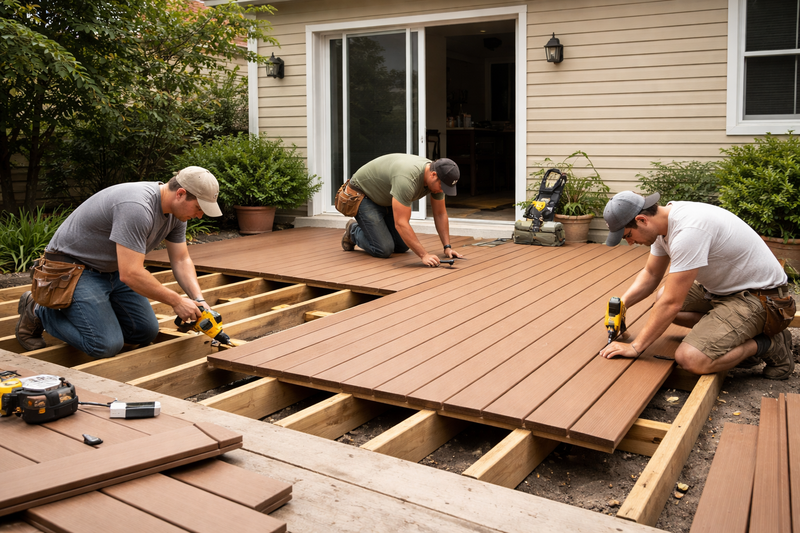
Out back, a solid deck changes how you use your yard. Instead of just grass and sky, it gives you room that works for sitting quiet or hosting loud. Building right means things hold up when rain comes, plus no wobbles underfoot. Start by picking what to build with – each choice affects time, cost, texture later. Steps matter – one wrong cut shifts everything down the line. Think ahead on layout before any nails go in. Even if aiming for something small, knowing where posts anchor keeps corners level. For those choosing fake wood boards, methods differ slightly from old-style planks. Same goes for plastic-like surfaces – they lock together different too. Every part links: plan first, measure twice, fasten slow. The whole thing stands or falls based on early decisions few notice.
Overview of Deck Installation
Starting outside your back door, a deck takes shape when you map out its design and gather what’s needed. Layout plans come first, then material picks follow – tied together by careful measurement and fit. Posts go down after the ground is prepped, holding up beams that support joists across. Boards lay overhead, fastened in place once framing stands solid. This addition opens up room to move beyond walls, giving more space without raising the roofline. Value climbs quietly as functionality meets curb appeal, step by wooden plank.
A well-built deck begins with solid preparation plus following area regulations closely. Choose natural timber or newer options such as composite or plastic – each one attaches differently, asks different upkeep. Knowing what’s involved keeps things steady underfoot, good looking, standing strong through years.
Planning Your New Deck Installation
Planning is the most important stage of any deck installation guide. A well-thought-out plan ensures efficiency, prevents costly mistakes, and helps you achieve the desired outcome.
Assessing Space and Purpose
Before starting your new deck installation, evaluate the available space and define how you intend to use the deck. Ask yourself:
- Will it be used for dining, relaxing, or entertaining?
- How many people will it accommodate?
- Do you need space for furniture, grills, or planters?
The answers to these questions will influence the size, layout, and design of your deck. Additionally, consider sunlight, shade, wind direction, and privacy when selecting the location.
Choosing the Right Materials
Choosing the right material is one of the most critical decisions in any deck installation. The three most common options are wood, composite, and PVC.
Wood Decking
Wood is a traditional and cost-effective option. It offers a natural look but requires regular maintenance such as sealing, staining, and sealing to protect against weather and pests.
Composite Decking
Composite decking is made from a mixture of wood fibers and plastic. It is durable, low-maintenance, and resistant to rot, insects, and fading. Many homeowners prefer this option for its longevity.
PVC Decking
PVC decking is made entirely from plastic and is highly resistant to moisture, mold, and stains. It is one of the most low-maintenance options available and ideal for humid or wet climates.
Wood vs Composite vs PVC
- Wood: Affordable, natural appearance, but high maintenance.
- Composite: Balanced option with durability and minimal upkeep.
- PVC: Premium choice with maximum resistance and minimal maintenance.
Choosing the right material depends on your budget, maintenance preference, and aesthetic goals.
Step-by-Step Deck Installation Guide
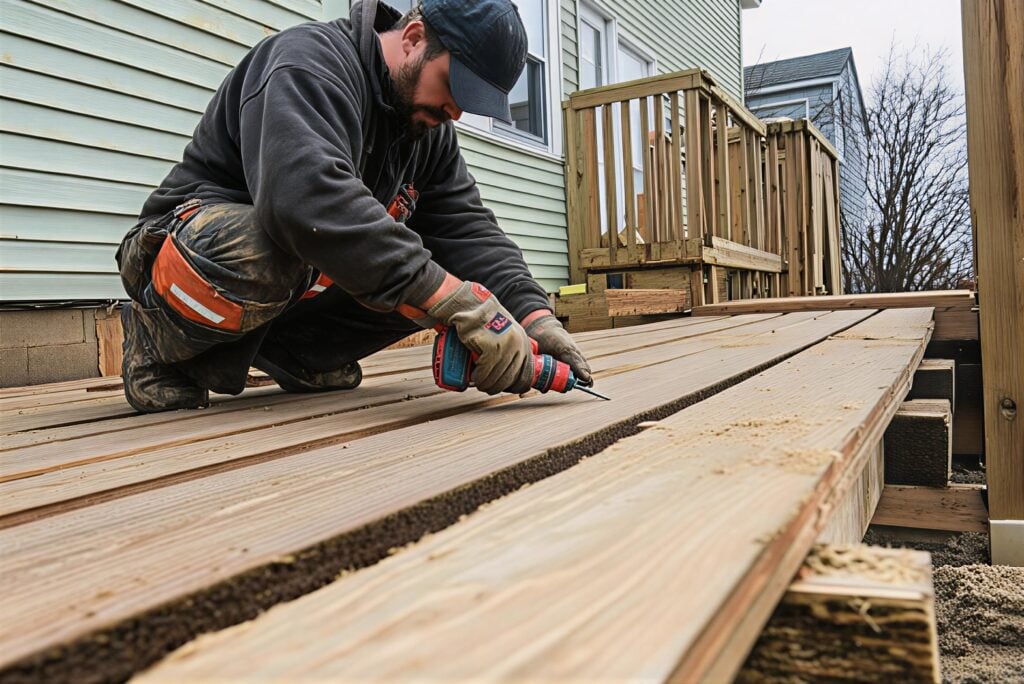
A proper deck installation guide follows a systematic approach to ensure safety and structural integrity. Here is a simplified overview of the process:
Clearing and measuring comes first, making sure everything fits just right. Built on that, footings plus posts lay down the groundwork for stability. With solid footing secured, beams follow – joined by joists to shape the skeleton. Once bones are up, decking goes on top, turning frame into floor. Railings appear last, along with steps and sealant for protection.
Key steps include:
- Preparing and leveling the ground
- Installing footings and support posts
- Laying decking boards
- Installing railings and stairs
- Applying finishing touches and sealants
Each step must be done carefully to ensure the deck is stable and meets safety standards.
How to Install a Composite Deck
Built right, a composite deck follows much of what you’d do with wood – though how it reacts means details matter more. Since these boards swell when hot and shrink when cold, leaving room between them makes all the difference. How they’re held down needs care too, not just where they sit.
A solid base begins with straight, treated lumber set evenly on the ground. From there, place each composite plank beginning at one side. Fasten them down using clips or screws made for that material. Spaces stay even across every gap – needed for water flow and natural movement. Level checks happen often as pieces lock into position.
Important tips:
- Always follow the manufacturer’s installation instructions
- Use hidden fasteners for a cleaner finish
- Maintain proper gaps for expansion
- Avoid overtightening screws
- Use proper tools designed for composite materials
Composite decking provides a polished look and reduces long-term maintenance compared to wood, making it a popular choice for modern homeowners.
PVC Decking Installation Process
PVC decking installation is similar to composite but offers even greater resistance to moisture and weather. Since PVC boards are lightweight and flexible, handling them properly is essential.
Begin by making sure the foundation is sturdy and level. Once it’s ready, lay each PVC plank carefully, spacing them slightly apart for natural movement. To keep things secure, use corrosion-resistant fasteners rather than standard screws. Hidden fittings often come with these systems – clips meant to lock into place without showing hardware. The result? A smooth finish where nothing interrupts the view.
Key considerations:
- PVC expands and contracts more than wood
- Use recommended fasteners and clips
- Ensure proper ventilation under the deck
- Follow spacing guidelines strictly
- Avoid direct sunlight during installation if possible
PVC decking is ideal for areas exposed to heavy rain or humidity, as it resists warping, rotting, and staining.
Maintenance Tips After Deck Installation
Proper maintenance ensures your deck remains safe and attractive for years. While wood decks require regular upkeep, composite and PVC options are easier to maintain.
General Maintenance Tips
- Clean the deck regularly with mild soap and water
- Inspect for loose boards, nails, or screws
- Remove debris to prevent moisture buildup
- Check for signs of wear or damage
Wood Deck Maintenance
- Seal or stain the deck every 1–2 years
- Sand rough surfaces when needed
- Protect from moisture and UV damage
Composite and PVC Maintenance
- Wash periodically with a garden hose
- Use mild cleaning solutions for stains
- Avoid harsh chemicals that may damage the surface
Regular maintenance not only improves appearance but also extends the lifespan of your deck.
Conclusion
Starting right means knowing what you want, gathering materials that fit, then moving forward one task at a time. Whether it’s wood, composite, or PVC, the choice changes how things go once work starts. Before any hammer swings, plans come first – then frame parts slowly form structure. As composite boards slide into place, gaps between them matter just as much as the clips tucked beneath their edges. Few things matter more than leaving room for movement when fitting PVC panels, especially as temperatures swing. Resort Exteriors treats every stage like it counts – because skipping steps shows up fast under stress. With winter’s freeze and summer’s grind piling on, only careful work holds its shape. Eventually you notice how little shifts – the railing stays tight, the surface doesn’t buckle – and remember: strength hides in choices few see at first.
Frequently Asked Questions
What is included in a deck installation guide?
Before any work begins, sketching the area sets direction. After that, choosing long-lasting materials matters most. A solid base stops future wobbling or sinking. Step-by-step construction follows a steady rhythm. Over time, regular attention prevents bigger issues.
How long does a new deck installation take?
A fresh deck could take only days, sometimes even stretches longer. How long really depends on size first, then material follows close behind. When patterns get tricky, time adds up quick. The kind of wood used plays a role just as much.
How to install a composite deck properly?
Right off the bat, grab the manufacturer’s manual before laying any composite decking. Using proper fasteners makes a bigger difference than most expect. Boards need space between them – heat and cold make materials move. Stability comes from a well-built frame underneath. Finish each section knowing the foundation holds it all together.
Is PVC decking installation different from wood decking?
Every once in a while, someone skips the manual – don’t be that person when laying a composite deck. Those little clips? They pull just as much weight as proper screws. Boards need breathing room; otherwise, heat makes them push against each other. Stability begins underground – the frame holds its ground only if built to last.
What is the best material for a new deck installation?
A choice shifts based on what matters most. When cost counts, wood fits tight budgets. Composite stands strong when left alone – season after season. PVC shrugs off weather while asking almost nothing back.
Why choose Resort Exteriors for deck installation?
A solid deck begins with who you pick. Resort Exteriors brings skill that shows in every cut and fastener. Their work stands up over years because they choose tough materials without cutting corners. You see the difference once it’s built – clean lines, steady frames, finishes that hold up. Trust comes from knowing each piece fits right the first time.