
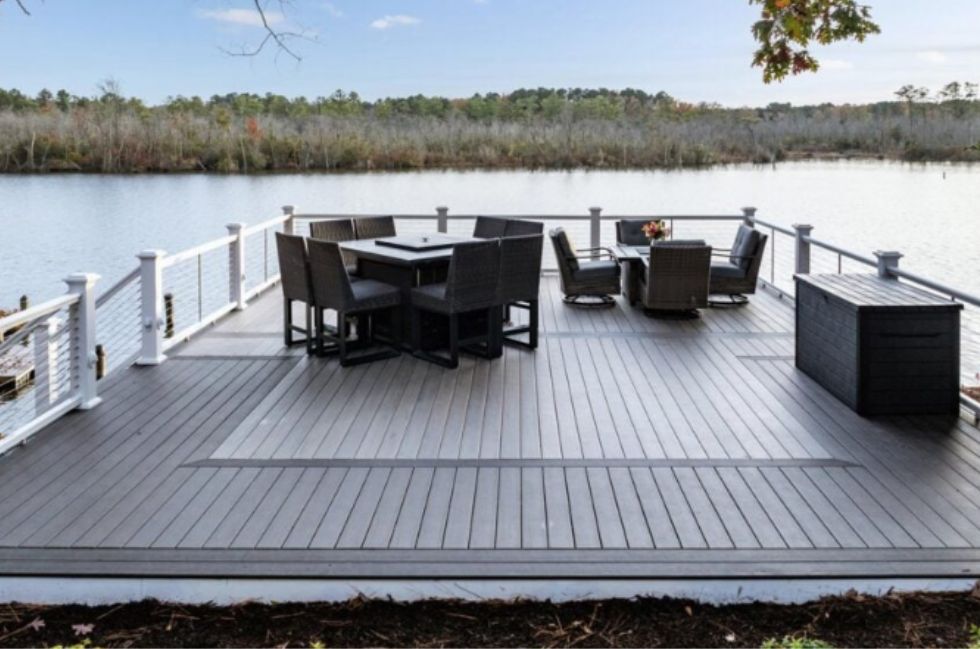
A well-designed deck can completely transform your outdoor living space. It offers an ideal place to have a relaxing night, a family togetherness, and a weekend barbecue. However, homeowners do not just install decks to beautify their home; rather, they do it in a manner that ensures safety, durability, and longevity, which adds value to their property and makes it look attractive to your house.
You are planning to hire a contractor or you want to do it yourself, knowledge about the basics of deck construction will save you time, money, and frustration. This comprehensive guide covers everything, from planning and materials to building supports, framing, and costs, along with answers to some of the most common homeowner questions.
1. Planning Your Deck: The Foundation of Every Great Build
A successful deck is well planned before a single hammer swings. The initial tip of construction of the deck to keep in mind, which is one of the most important, is to have a clear design and budget.
Establish the Intention and Structure
Ask yourself:
- How are you going to use your deck, to have fun, relax, eat, and have everything at once?
- What size must it be to suit you?
- Are you in the mood for a plain rectangular deck, or would you like a multi-level deck with built-in seating?
Draw a sketch or design using the Internet tools to visualize the layout. It is important to remember that the design must be a continuation of your landscape and home.
Check Building Codes and Permits
Many house owners do not pay much attention to the permits. One can result in fines or demolition of your building in case your building does not comply with safety regulations. Get to know the setback requirements and the height of railings, and the weight of loads by contacting your local building authority.
Choose the Right Materials
Your deck will last longer with the material you use.
- Pressure-treated wood is cheap and strong yet needs frequent maintenance.
- Cedar or redwood has natural resistance to rot and insects, but may cost more.
- Composite decking offers an environmentally friendly low maintenance option that is recycled plastics and wood fiber.
Before deciding on the best material to use in your project, make sure you consider the maintenance, the look, and the budget.
2. Building a Floating Deck on Cinder Blocks
The deep foundations are not necessary in all decks. In the smaller or ground-level case, an inexpensive and fast remedy can be a floating deck with cinder blocks – a solution that will suit DIYers.
What Is a Floating Deck?
A floating deck is a free structure and does not have any deep foundations on the ground because it is held to the earth by a floating deck. It does not use concrete footings or piers but rather uses precast concrete blocks or cinder blocks that equally distribute the weight.
Floating Decks are beneficial in the following ways.
- Affordable: There is no necessity for massive excavation or pouring of concrete.
- Fast installation: It can be done in less than a weekend.
- Flexible: Can be moved or altered easily.
- Ideal on level yards: Ideal in the event of flat ground with good drainage.
Important Considerations
Although a floating deck is less complex, it needs to have a firm foundation.
- One should level the ground and compact and then put blocks.
- Deck building supports, such as adjustable deck blocks or pedestals, are used to adjust the height.
- Direct contact of wood with the ground should be avoided to avoid rot.
- Smaller constructions of less than 24 inches high are best suited to floating decks.
Although they are simple to put up, always check the local codes on whether floating decks are good or not, as there are places where they need deeper foundations as a safety measure.
3. The Deck Framing Guide: Strength You Can’t See but Must Build Right
The frame of any deck is the most important part of the deck, the invisible part that supports all the weight. Using a deck framing guide helps in making sure that your deck is stable, level, and safe for many decades.
Components of Deck Framing
-
Ledger Board:
The ledger board can be used to connect your deck to your home in case it is attached. It should be firmly fixed on the frame of the house and flashed to avoid water leaks.
-
Posts:
Posts hold the deck in an upright position. They are usually laid on concrete pedestals or blocks and constructed of pressure-treated timbers.
-
Beams:
Beams are horizontal to the posts so that they support the weight of the joists above.
-
Joists:
Joists are placed at right angles to beams, and they bear the decking boards. The standard size is 12-16 inches between the centers, according to the decking material.
-
Decking Boards:
These are the part of your deck that comes into sight. Ventilate and drain boards with little spacing.
Pro Tips for Framing Success
- Instead of using corrosible fasteners, use galvanized or stainless steel.
- Always ensure that the posts, beams are plumb and level before fixing.
- Fit metallic connectors at connections to provide additional stability.
- Ends of treated lumber should be cut off to avoid absorption of moisture.
The correctly framed deck is not only effective in supporting weight but also averts warping, sagging as well and shifting with time.
How to Install Deck Steps
Steps are necessary because your deck is raised making access and safety imperative. Deck steps may appear to be an overwhelming task, but with appropriate measurements and equipment, it is not difficult even for an amateur.
Step-by-Step Process
-
Measure the Total Rise:
Measure the deck surface to the ground on which the stairs will be set.
-
Calculate the Number of Steps:
Divide the total rise by the sum of rise heights (average rise height). As an example, an increase of 28 inches takes four steps.
-
Determine the Run:
An excellent tread depth (run) is approximately 10-11 inches.
-
Cut the Stringers:
Have two 12 x 2×12 pressure-treated ridden boards and a framing square used to mark and cut the stair profile.
-
Attach Stringers to the Deck Frame:
Attach with the help of brackets or hangers.
-
Add Treads and Risers:
A matching surface on the deck should be used to maintain unity. Provide minimal spaces between treads to drain.
-
Install Railings:
In case the steps are over 30 inches, then the steps must have railings to comply with safety requirements.
Safety Reminder
Always make sure that your stair base is firm and smooth. The badly constructed stairs may lead to movement or squeakiness, or even accidents.
4. Deck Building Supports: The Hidden Heroes
All decks, whether floating or on elevations, are supported by deck building supports to ensure the stability of the structures and even distribution of weight.
Types of Deck Supports
Concrete Footings or Piers: The strongest and most typical choice of raised decks. These are not only under the frost line to prevent movement.
Cinder Blocks: Can be used when the ground is flat and the deck is to be suspended.
Adjustable Pedestals: They can be adjusted to fine heights without excavation.
Metal Post Anchors: Wooden posts should not touch the ground to prevent them from being damp.
Why Proper Support Matters
Strong supports make your deck not sink, tilt, or even collapse when it has to support heavy loads. It is not the portion we see, but it is the portion that makes all things safe and sound.
How Much Does It Cost to Have a Deck Installed?
A new deck budget includes a number of variables, which include size, height, material, and labor costs.
General Cost Estimates
- Self-Installation: $8-10 per square foot
- Professional Installation: $25-$35 a square foot.
What Influences the Cost?
- Deck Size: Decks of larger size need more materials and labor.
- Height Above Ground: Raised decks are provided with deeper footings and supports.
- Materials: Composite and hardwood are more expensive and durable.
- Extras: Seating, lighting, and railings are incorporated in the project and add to the overall expense.
- Local Labor Rates: There is a great difference in expenses from area to area.
Pro Tip
Reserve between 10 and 20 percent of your budget to cover unforeseen costs – such as additional footings and structural modifications.
How to Choose a Roofing Contractor After Storm Damage?
This question is not directly connected to the deck installation, but it is something that homeowners will have to deal with when repairing or renovating a property. The selection of an appropriate roofing contractor is important to ensure that the invested capital is not lost after a storm.
Key Steps:
- Recruit professionals who are licensed locally and insured.
- Request written quotes and compare at least three.
- Review of references and checks to be reliable.
- Check material and labor warranties.
- Do not use intense sales methods of storm chasers.
A reliable roofing contractor will make sure that your house, or rather your new deck, is not subjected to water and other weather problems.
Frequently Asked Questions (FAQs)
1. How to choose a roofing contractor after storm damage?
Seek licensed and insured local contractors and experienced local contractors. Get written estimates in detail, check for warranties, and do not deal with storm-chasing contractors who coerce you into a fast-time offer.
2. How to install deck steps?
Calculate the total height, then divide by 7 inches. This gives the number of steps and cuts your stringers using treated lumber. Then set them into your deck frame, provide treads and risers, and rail them.
3. What is the price of installing a deck?
The cost of decks is determined by material, size, and labor. Assume that DIY constructions cost between 8-10/ sq. ft., professional-installed constructions between 25-35/ sq. ft.. Always plan on a 10-20 percent contingency.
Final Thoughts
One of the most joyous home improvement projects that you can do is building a deck. Not only does it add functionality and value to your home, but it also provides you with a personal getaway just steps out of your door.
Adhering to professional deck building tips, the appropriate deck framing guide, selecting reliable deck building supports, and considering such effective variants as a floating deck on cinder blocks, you will be able to make sure that your deck will be beautiful, safe, and strong enough.
It doesn’t matter whether you are creating it yourself or have paid someone to create it, it does not matter, good planning and good materials are the basis of any good deck.